“This product is amazing! Love it! ⭐⭐⭐⭐⭐”
That testimonial might work great for a $29 productivity app on the App Store. For a $50K enterprise software deal? It’s completely worthless.
I learned this the hard way when we first launched. We had testimonials. Good ones, we thought. Short, enthusiastic, with star ratings. They looked just like what worked for consumer products.
Our enterprise conversion rate was 1.8%. Prospects would go through demos, ask good questions, then… nothing. When we finally got on calls with people who didn’t convert, the feedback was consistent: “We couldn’t find enough evidence this works for companies like ours.”
We had 30 testimonials on our site. What we didn’t have was the kind of testimonials that actually work in B2B.
The fundamental difference nobody talks about
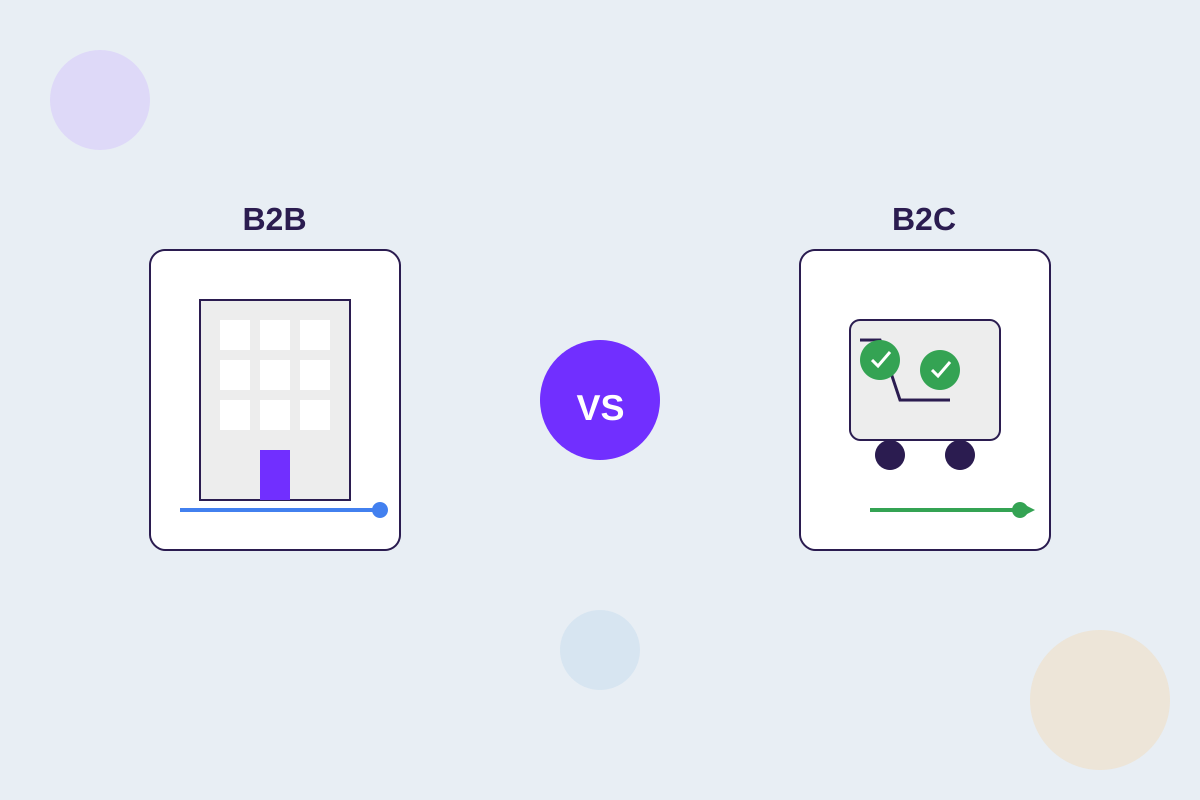
B2C purchases and B2B purchases are different animals. Not slightly different—fundamentally, structurally different.
When someone buys a consumer product, they’re spending their own money on something they’ll use personally. The decision takes minutes to days. If it doesn’t work out, they return it or eat the $30 loss. No big deal.
When someone buys enterprise software, they’re spending company money. Multiple people are involved in the decision. There’s a budget approval process. The sales cycle runs weeks to months. And if it doesn’t work? That’s a career risk. People get fired over bad software purchases.
This means B2B testimonials need to address a completely different set of concerns.
The consumer buyer wants to know: Does it work? Is it easy? Is it worth the price? Do other people like it?
The enterprise buyer wants to know: Will it solve our specific business problem? What’s the total cost of ownership? How long until ROI? What’s the implementation effort? How does it integrate with our existing systems? What happens if the vendor goes out of business? What do our peers at similar companies think?
See the difference? It’s not just depth—it’s an entirely different category of questions.
What enterprise buyers actually do
Here’s what happens when an enterprise buyer lands on your testimonials page. They don’t just read and believe. They investigate.
Sarah, a VP of Engineering at a 500-person SaaS company, told me her exact process: “I see a testimonial, I immediately look at the person’s title and company. If they’re a junior person or from a tiny company, I skip it. If they seem relevant—similar size company, similar role—I open LinkedIn and verify they exist and actually work there. Then I read what they said to see if it’s specific or just generic praise.”
The whole process takes 60-90 seconds per testimonial. If she can’t verify someone, she assumes it’s fake. If the testimonial is vague, she assumes it’s marketing-written.
B2C buyers might do this for big purchases like cars or homes. But for a $49 app? Never. They just read the testimonial and either believe it or don’t.
This verification behavior means incomplete attribution kills your credibility in B2B. “John D., Manager” doesn’t work. Neither does “Great product!” without specifics.
The testimonial that actually works in B2B
Let me show you the difference with a real example.
B2C-style testimonial (what doesn’t work):
“Love this tool! Super easy to use and the interface is beautiful. Customer support is amazing. Highly recommend! ⭐⭐⭐⭐⭐”
Sarah M., Marketing Manager
B2B-style testimonial (what works):
“We evaluated five compliance platforms before choosing HelloTrust. Since implementation, we’ve reduced audit prep time by 70% and achieved SOC 2 Type II certification four months faster than projected. Our CFO was particularly pleased—we’re saving $80K annually compared to our previous solution.”
Sarah Mitchell, Head of Security & Compliance Acme Software Inc. | Series B SaaS, 150 employees [LinkedIn Profile] ✓ Verified
The second one works because:
It has specific, measurable outcomes (70% reduction, 4 months faster, $80K savings). Enterprise buyers need data to justify purchases to their committees.
It shows the decision process (evaluated five platforms). This signals thorough vetting, not impulse buying.
It addresses multiple stakeholder concerns (CFO pleased with savings, faster certification). B2B purchases involve multiple people.
It has complete, verifiable attribution. The buyer can find Sarah on LinkedIn in 10 seconds and confirm everything.
The first testimonial addresses none of these enterprise buying concerns. It’s emotionally positive but informationally empty for a business buyer.
The mistake everyone makes
When B2B companies start collecting testimonials, they usually default to B2C patterns because those are what we see everywhere. Amazon reviews, App Store ratings, Yelp feedback.
We made this mistake too. Our early testimonials were short, emoji-filled, and focused on how “easy” and “great” everything was.
Then we ran an experiment. We replaced our homepage testimonials with longer, more detailed ones that included specific metrics, complete attribution, and LinkedIn links. No emojis. No star ratings. Just detailed business outcomes.
Conversion rate went from 1.8% to 2.6%. That’s a 44% increase from just changing testimonial format.
The insight: B2B buyers don’t want testimonials that feel like consumer reviews. They want case study-lite evidence that this solution works for businesses like theirs.
What to focus on instead
If you’re collecting B2B testimonials, here’s what actually matters:
Measurable business outcomes. Not “saved time” but “reduced audit prep from 6 weeks to 10 days.” Not “improved efficiency” but “cut compliance costs by $80K annually.” The specificity matters enormously.
Complete professional attribution. Full name, complete title (not just “Manager”), company name, company context (stage, size, industry), and LinkedIn profile. This enables verification and provides peer context.
Multiple stakeholder perspectives. The CFO cares about cost. The CTO cares about integration. The end users care about ease of use. Great testimonials address multiple concerns, or you collect different testimonials for different stakeholders.
Integration and implementation details. Enterprise buyers worry about whether this will be a disaster to implement. Testimonials that mention smooth integration, fast setup, or good support directly address this fear.
Peer validation at similar companies. A testimonial from a 10-person startup means nothing to a 500-person company. Match testimonials to audience—show prospects “people like me trust this.”
The stuff that doesn’t matter in B2B? Emojis. Star ratings. Short, punchy praise. Interface beauty. All the things that work great for consumer products fall flat in enterprise contexts.
One tactical change that works immediately
If you have existing testimonials that feel too B2C, here’s the fastest fix:
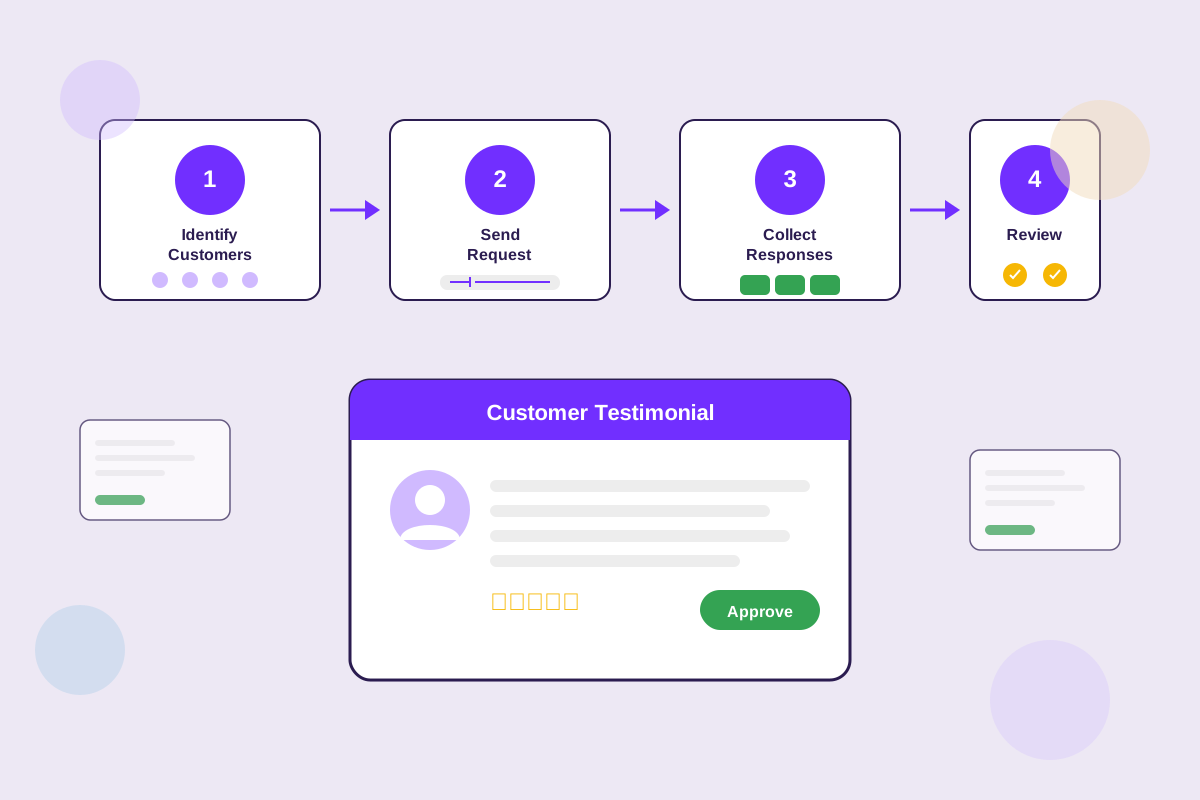
Reach back out to those customers and ask for specific metrics. The email is simple:
Hi [Name],
We’d love to make your testimonial even more impactful. Could you share any specific metrics or outcomes you’ve seen? For example:
- Time saved per week/month
- Cost reduction
- Faster processes (before vs. after)
- Team efficiency gains
These specifics help prospects see themselves in your success story.
Response rate on this is surprisingly high—60-70% in our experience. People who already gave you a testimonial are usually happy to enhance it.
Once you have the metrics, update the testimonial and add complete attribution (LinkedIn profile, company context). This single change can dramatically increase the testimonial’s effectiveness.
The format that converts
Length matters differently in B2B. Consumer testimonials should be short—people skim them quickly. B2B testimonials can and should be longer.
A good B2B testimonial is 3-5 sentences and includes:
Sentence 1: Context (their situation, challenge, or goal)
Sentence 2-3: Specific outcomes and metrics
Sentence 4: Secondary benefits or stakeholder perspectives
Optional sentence 5: Recommendation for similar companies
Here’s that structure in action:
“As a fast-growing Series B company, we needed SOC 2 certification to close enterprise deals but didn’t have the security team or budget for traditional approaches. HelloTrust got us audit-ready in 10 weeks with automated evidence collection and continuous monitoring. We’ve since closed $2M in enterprise contracts that required compliance, and our security team loves that audits no longer mean weeks of manual evidence gathering. I recommend HelloTrust to any high-growth SaaS company serious about compliance without enterprise overhead.”
That’s 78 words. It would be too long for B2C. For B2B, it’s perfect—it tells a complete, verifiable story with specific outcomes and clear recommendations.
The bottom line
B2C and B2B testimonials aren’t just different in degree—they’re different in kind.
B2C testimonials work through volume, emotion, and social proof at scale. They’re short, enthusiastic, and emphasize personal experience.
B2B testimonials work through specificity, verifiability, and peer validation. They’re longer, data-driven, and emphasize business outcomes.
Trying to use B2C tactics in B2B contexts doesn’t just fail to work—it actively undermines credibility. Enterprise buyers see consumer-style testimonials and mentally file your product under “not serious.”
The good news? Once you understand what enterprise buyers actually need, collecting the right testimonials is straightforward. Ask for specific metrics. Get complete attribution. Request LinkedIn verification. Show the business impact.
Do that, and your testimonials stop being nice-to-have marketing decoration and start being the peer validation that actually moves enterprise deals forward.
Want to collect B2B testimonials that enterprise buyers actually trust? See how HelloTrust helps B2B companies gather verified customer endorsements with complete attribution, specific metrics, and LinkedIn verification—built specifically for enterprise buying committees.