For two years, I collected testimonials the same way: whenever I remembered, I’d send a quick “Hey, would you mind writing us a testimonial?” email. Maybe one in ten people responded. The ones who did usually sent back something like “Great product! Really helpful!” which wasn’t specific enough to be useful.
I had maybe 5-6 testimonials total after two years of business.
Then I talked to a founder who had 50+ high-quality testimonials collected in six months. When I asked how, he said: “I have a system.”
Turns out, collecting testimonials isn’t about luck or having especially enthusiastic customers. It’s about having a repeatable process that makes it easy for customers to say yes and easy for you to collect what you need.
Here’s the system that now gets us 2-3 new testimonials every week.
Start with the right customers
The first mistake I made was asking everyone. New customers who’d barely used the product. Customers who seemed happy but hadn’t achieved anything measurable. Even customers who were somewhat frustrated but still using us.
The response rate was predictably terrible.
Now I’m way more selective. I only ask customers who meet these criteria:
They’ve achieved a measurable, impressive result. Not “they seem happy” but “they reduced something by 60%” or “they launched something in half the expected time.” Concrete outcomes make for compelling testimonials.
They’re actually engaged. They use the product regularly, respond to emails, maybe participate in user calls or webinars. If someone’s been radio silent for three months, they’re not going to write a testimonial.
They’re senior enough to have credibility. In B2B, a testimonial from an intern doesn’t carry weight. You want Directors, VPs, Heads of, C-level. People who actually make purchase decisions.
They represent your target customer. A testimonial from a 10-person startup won’t help you sell to 500-person enterprises. Match the testimonial provider to the audience you’re trying to reach.
Once I started only asking people who met all four criteria, my response rate went from 10% to 45%. The quality improved dramatically too—these people had real stories to tell.
Timing is everything
The second breakthrough was realizing timing matters more than I thought.
I used to ask randomly whenever we “needed more testimonials.” Sometimes that meant reaching out to a customer six months after they’d had a good experience. By then, the details were fuzzy and the enthusiasm had faded.
Now I ask immediately after something good happens. The trigger events:
Right after a major win. Customer achieves a milestone, closes a big deal, ships a product, hits a metric they were chasing. I wait maybe an hour for them to celebrate, then reach out. The excitement is fresh, they’re feeling positive about your product, and they clearly attribute their success to what you provided.
Last week, one of our customers posted on Twitter about closing their first enterprise deal after getting SOC 2 certified using our platform. I messaged them within two hours: “That’s amazing! Would you be open to sharing your story?” They said yes immediately and sent a detailed testimonial the same day.
After they voluntarily give you positive feedback. They send an email praising a feature. They mention you positively in support chat. They thank you for solving a problem. That’s the moment to ask—they’ve already expressed satisfaction, you’re just channeling it into a testimonial.
During quarterly business reviews. If you do regular check-ins with customers, these are perfect opportunities. You’re already discussing their results and reviewing metrics. The conversation naturally supports: “These results are impressive—would you be comfortable letting us share your story?”
The times I don’t ask: during onboarding (no results yet), right after a support issue (even if resolved), or when they’ve been inactive. Bad timing kills response rates.
The request that gets responses
For years my testimonial requests looked like: “Would you be willing to write us a testimonial?”
Seemed reasonable. Also produced either no response or vague, unusable testimonials.
The problem was I was asking them to do all the work. Figure out what to write, how long to make it, what angle to take, how to phrase things. That’s a lot of cognitive load for a busy person.
Now my requests provide a draft:
Hi Sarah,
I just saw that you reduced your audit prep from 6 weeks to 10 days—that’s incredible! Your team must be thrilled.
Would you be comfortable sharing your experience in a testimonial? Your story would really help other security leaders see what’s possible.
To make this super easy, I’ve drafted something based on our conversations. Feel free to use as-is, edit, or completely rewrite:
“HelloTrust cut our SOC 2 audit prep from 6 weeks to 10 days. The automated evidence collection saved our team 40+ hours per cycle. We went from dreading audits to having everything ready to go.”
If you’re comfortable with it, we’d also love to include your LinkedIn profile link and a professional photo.
No pressure at all—only if it feels right!
Thanks, James
The response rate on this format is about 45% compared to maybe 10-15% on the old “would you mind writing something?” approach.
Why it works:
I mention their specific achievement upfront. This reminds them of the value and makes it personal, not generic.
I provide a complete draft. They can approve it in 30 seconds or edit if they want. The blank page problem is solved.
I explain why it matters. “Help other security leaders” frames this as paying it forward, not just helping me get marketing content.
I give them an easy out. “No pressure” actually increases yes rates because people don’t feel trapped.
I request full attribution upfront. LinkedIn profile, photo, complete title. Getting this later adds friction, so I ask for everything at once.
Handle the follow-up without being annoying
Most testimonials require at least one follow-up. People are busy. Emails get buried.
But there’s a way to follow up that feels helpful, not pushy.
Four days after the initial email, if I haven’t heard back:
Hi Sarah,
Just bumping this in case it got buried! Totally understand if now’s not a good time.
If you’re open to it but swamped, I can make this even easier:
- Send you a 60-second approval draft (literally just reply “looks good”)
- Jump on a 5-min call and handle all the writing
- Circle back in a few weeks when things calm down
No pressure!
James
About 20% of people respond to this first follow-up who didn’t respond to the initial email.
If still no response after a week, one final message:
Hi Sarah,
I know you’re busy, so this is my last note on this!
If now’s not the right time, totally understood. If you do want to share your story but need it super quick, just reply “yes” and I’ll send a 60-second approval draft.
Either way, thanks for being a great customer!
James
This closes the loop gracefully. Some people actually respond to this one because they appreciate the no-pressure final offer.
After that? I let it go. Testimonials aren’t worth damaging customer relationships over.
Get what you actually need
Early on, I’d get a testimonial, publish it, then realize I was missing the person’s title or LinkedIn profile or photo. I’d have to go back and ask for more stuff, which added friction and sometimes the person just never responded to the follow-up.
Now I ask for everything up front:
Amazing, thank you! To finalize this, could you send over:
- Your full title at [Company]
- Link to your LinkedIn profile
- A professional headshot
- Permission to use [Company] logo (optional but nice to have)
This helps readers relate to your story and trust the results.
About 90% of people who agree to provide a testimonial will send these materials. The LinkedIn link and photo are critical for B2B—they enable verification and add credibility.
If someone says they can’t share their company logo (legal restrictions, whatever), that’s fine. But the photo and LinkedIn are non-negotiable for B2B testimonials.
The objections you’ll hear
“I’m not a good writer.”
Response: “No worries! I’ve drafted something based on our conversations—you just need to review and approve it. Should take 2 minutes.”
Ninety percent of the time they approve with minor edits or no changes. You’ve removed the work.
“I need to check with marketing/legal.”
Response: “Absolutely! Here’s what we’d like to publish—feel free to share with your team. Happy to adjust anything or work with your legal on approval.”
Then actually be flexible. Some companies have testimonial approval processes. Work with it.
“I don’t have time right now.”
Response: “Totally understand! I can make it even faster—just reply ‘approved’ to the draft I sent and we’re done. Or I can circle back in a few weeks?”
Often they’ll just approve the draft rather than schedule for later.
Move fast when they say yes
This might be the most important part: when someone agrees to provide a testimonial, move fast.
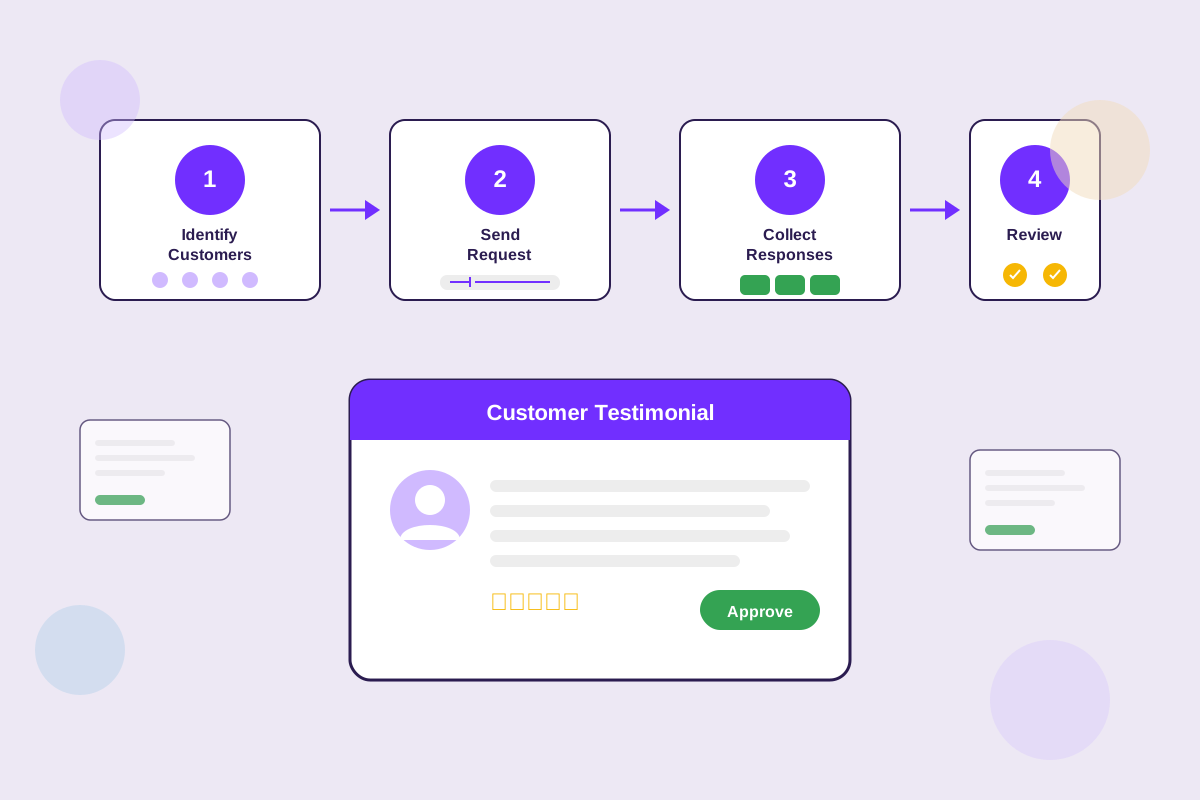
Customer says yes → confirm what you need → get their materials → design the testimonial → send for final approval → publish → thank them
That entire cycle should take less than a week. Ideally 2-3 days.
Why the urgency? Because momentum fades. If you wait two weeks to follow up, they might forget the context or lose interest. Strike while the iron is hot.
Also, seeing their testimonial go live quickly feels good to customers. They helped you out, and you actually used it. That reinforces that giving testimonials to you is worthwhile.
I’ve lost testimonials by being too slow. Someone agrees, I wait a week to follow up for materials, they don’t respond to that follow-up. The opportunity closes.
Start this week
If you’re reading this thinking “I should really collect more testimonials,” here’s what to do this week:
Identify three customers who’ve had great results in the past month. Write down specifically what they achieved.
Draft a personalized testimonial request email for each one using the format above. Include a draft testimonial based on what you know about their experience.
Send all three emails today.
Even if only one responds (though you’ll likely get 2-3), you’ve started building momentum. Next week, ask three more. Within a month, you’ll have more testimonials than you had in the previous year.
The hardest part is starting. Once you send the first few and see that people actually respond, it gets easier.
Want to automate testimonial collection? See how HelloTrust automatically triggers testimonial requests after customer milestones, provides one-click recording for customers, and handles follow-ups—turning a 30-minute manual process into a 2-minute automated workflow.