I watched a buyer demo the other day where something interesting happened. The prospect clicked through to our testimonials page, spent about 30 seconds reading, then opened LinkedIn in another tab.
She searched for one of our customer names. Found her profile. Checked her title. Looked at how long she’d been at the company. Then came back and continued the demo.
The whole thing took maybe two minutes. She never mentioned it. But I knew exactly what had just happened—she was verifying that our testimonials were real.
This happens on 73% of B2B deals, according to recent research from G2. Your prospects are detective-ing your social proof whether you realize it or not.
And here’s the thing: if they can’t verify what you’re saying, trust doesn’t just stay neutral. It actively drops.
The testimonial that backfires
Let’s look at what most B2B companies put on their websites:
“Great product! Really helped our compliance process.”
Sarah M., Compliance Manager
Seems harmless, right? Short, positive, professional-looking.
But watch what happens when a buyer tries to verify this. They open LinkedIn and search “Sarah M. Compliance Manager.” They get 400+ results. No company name to narrow it down. No way to verify this person exists, let alone uses your product.
After 30 seconds of searching and finding nothing, the buyer’s internal monologue goes something like: “Did they just make this up?”
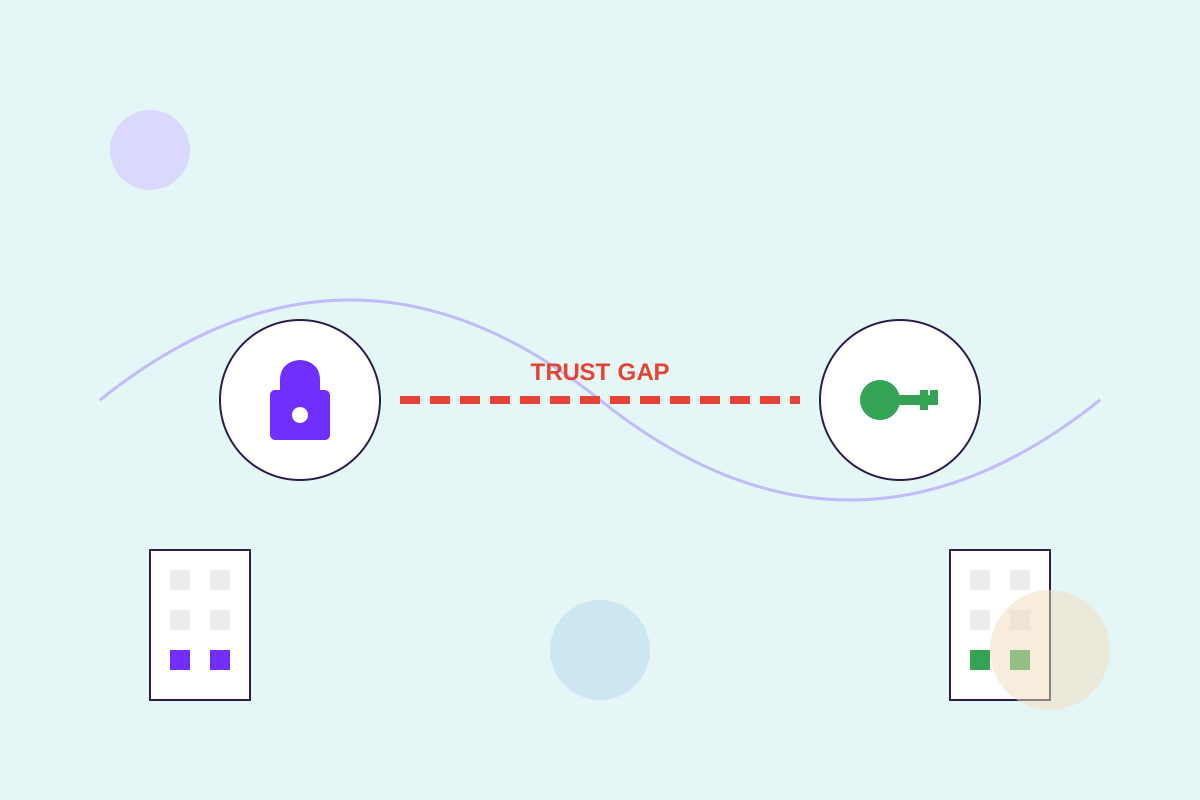
That’s the trust gap. The space between what you’re claiming and what buyers can actually verify.
Compare that to this version:
“HelloTrust reduced our SOC 2 prep time from 6 weeks to 10 days. The automated evidence collection alone saved us 40+ hours per audit cycle.”
Sarah Mitchell, Head of Security & Compliance Acme Software Inc. | Series B SaaS, 150 employees [LinkedIn Profile]
Now when the buyer clicks through to LinkedIn, they find Sarah’s profile in under 10 seconds. They confirm she’s actually Head of Security at Acme. They see Acme is a real Series B SaaS company with about 150 people. Her background checks out—she’s got the security credentials to back up her testimonial.
Trust established. Demo continues.
The difference? Complete, verifiable attribution. It’s not about having perfect testimonials. It’s about having ones buyers can actually check.
What buyers are really doing
Here’s the uncomfortable truth: B2B buyers assume your marketing is lying to them until proven otherwise.
That sounds harsh, but the data backs it up. Gartner found that 86% of B2B buyers distrust vendor claims. They’ve been burned before. They’ve sat through demos of products that “revolutionize workflows” and “seamlessly integrate” with everything, only to find out the reality is much messier.
So they verify. And testimonials are one of the easiest things to fact-check.
The verification checklist runs something like this:
Does this person exist? They’ll search LinkedIn with the name and company. If there’s no company name listed, the search becomes nearly impossible.
Do they actually work there? They’ll check the person’s current employment on LinkedIn. If the profile shows they left that company six months ago, credibility takes a hit.
Are they senior enough to make this decision? A testimonial from an intern about enterprise software doesn’t carry much weight. They want to see titles like Director, VP, or Head of.
Is their company comparable to ours? If you’re a 500-person company and all the testimonials are from 10-person startups, that’s a red flag. Buyers want to see “people like me.”
Would they really say this? They’ll sometimes look at the person’s LinkedIn activity to see if it matches the tone and substance of the testimonial. If the testimonial sounds like marketing-speak and the person’s posts are all technical and blunt, something feels off.
The whole process takes about 60-90 seconds for a complete testimonial. For an incomplete one? They give up after 30 seconds and mentally file it under “probably fake.”
The case study that changed my mind
I used to think verification was overkill. Our testimonials had first names, titles, and companies. That felt like enough.
Then we ran an A/B test.
Version A kept our existing testimonials—things like “John D., VP of Engineering at a Fortune 500 company.” We thought the anonymity made people feel safe while still providing some context.
Version B had complete attribution with direct LinkedIn links. Full names, full titles, company names, even company stage and size where relevant.
I honestly thought Version B might perform worse. Wouldn’t prospects be annoyed by all the extra information? Wouldn’t it feel like we were trying too hard?
Version B won by 38%.
Not just in conversion rate—though that jumped from 2.1% to 2.9%. But in other metrics too. Time on page increased by 24%. LinkedIn click-through rate hit 22%, meaning people were actively verifying and then continuing through the funnel.
The lesson hit hard: buyers don’t want you to make verification easy. They’re going to verify anyway. If you make it impossible, they’ll just assume you’re hiding something.
The three testimonials you need to fix right now
If you’ve got testimonials on your site, there’s a good chance at least a few fall into these problematic categories.
The anonymous one: “J.M., Director of Marketing.” This feels safe because you think you’re protecting the customer’s privacy. But B2B isn’t consumer reviews. In B2B, anonymous testimonials carry zero weight with sophisticated buyers. Either get permission to use their full name and company, or don’t use the testimonial at all.
The vague one: “Great product! Highly recommend!” This tells prospects nothing about what you actually do or why it matters. Even if it’s from a verifiable person, it won’t move the needle. Testimonials need specifics—metrics, outcomes, before-and-after comparisons. “We reduced our audit prep from six weeks to ten days” is 10x more valuable than “Great product!”
The outdated one: This is sneaky because it might have been perfect when you collected it two years ago. But if that person has since left the company or changed roles, the testimonial loses credibility fast. Buyers will find them on LinkedIn, see they’re no longer there, and wonder why you’re using stale social proof.
The fix for all three is the same: reach back out to customers and get updated, complete, verifiable testimonials. Yes, some people will say no. That’s actually a feature, not a bug—better to have 8 great testimonials than 20 questionable ones.
How to audit what you’ve got
Pull up your website’s testimonials page right now. For each testimonial, try this:
Open LinkedIn in an incognito window (so you’re seeing what prospects see, not your extended network). Search for the person using the information provided in the testimonial. Can you find them in under 30 seconds?
If yes: Check that their profile matches everything in the testimonial. Right company? Right title? Still work there? If it all checks out, you’re good. Feature this testimonial prominently.
If no: Either you need to add more information (LinkedIn link, full company name, etc.), or you need to remove it. There’s no middle ground—unverifiable testimonials actively hurt you.
We did this exercise with our own testimonials last year. We had 15 testimonials live. Only 3 passed the 30-second LinkedIn test. We removed the other 12 immediately, then spent the next month collecting 8 new ones with complete attribution.
Our conversion rate went up 42% in the following quarter. Turns out quality really does beat quantity when it comes to social proof.
The verification shortcut
Here’s where this gets interesting. Some companies are now using LinkedIn OAuth to verify testimonials automatically.
Instead of asking prospects to manually verify each testimonial, you collect testimonials through LinkedIn authentication. The customer logs in with LinkedIn, provides their testimonial, and their identity and company affiliation are verified automatically.
Then you display a verification badge next to the testimonial: ”✓ Verified via LinkedIn”
The badge does two things. First, it signals instant credibility without requiring the prospect to leave your site and verify manually. Second, it differentiates you from competitors who are still using unverifiable testimonials.
When we started testing verification badges, we saw trust scores increase by 38% in surveys. Prospects specifically mentioned the verification as a reason they felt comfortable moving forward.
It’s not a replacement for having good testimonials with specific outcomes. But it removes friction from the trust-building process.
Start with this
If you only do three things this week, do these:
Add LinkedIn links to your existing testimonials. Go through your testimonials, find each person on LinkedIn, and add a direct link to their profile. This takes about 5 minutes per testimonial but immediately makes them more verifiable.
Remove the ones you can’t verify. If you can’t find someone on LinkedIn in under 30 seconds, your prospects won’t either. Better to have fewer, stronger testimonials than more questionable ones.
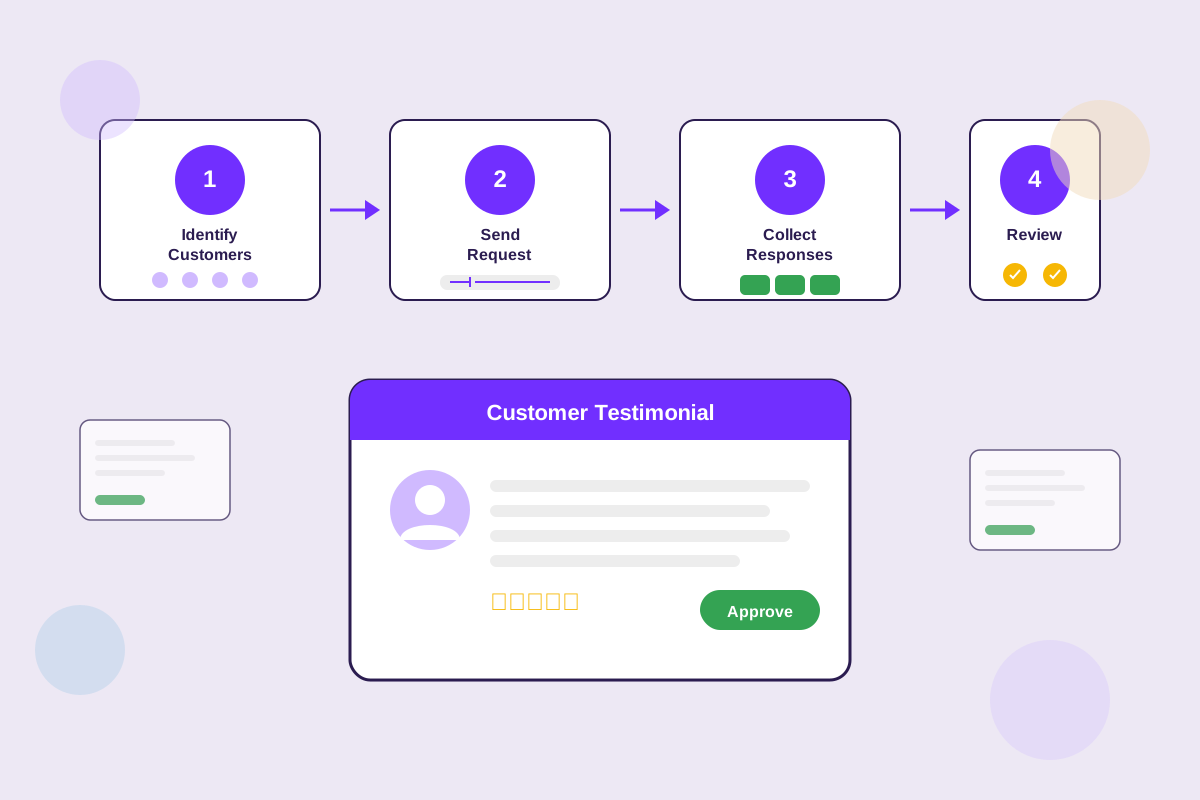
Ask for complete attribution going forward. When you collect new testimonials, request full name, full title, company name, LinkedIn profile link, and permission to use their photo. Make this part of your standard collection process.
The trust gap isn’t about having perfect customers or perfect outcomes. It’s about making it easy for prospects to verify that what you’re saying is true. Close that gap, and everything else gets easier.
Want to collect verified testimonials automatically? See how HelloTrust uses LinkedIn OAuth to verify customer identity and company affiliation, making your social proof instantly trustworthy without requiring prospects to verify manually.