“Can I ask you for a testimonial?”
Why does this question make my stomach turn every single time? I’ve delivered great results. The customer is happy. They’ve told me multiple times how much they love the product. And yet, asking for a testimonial feels like I’m asking them to do me a huge favor.
Turns out, I’m not alone in this feeling. I’ve talked to dozens of founders and customer success managers, and almost everyone says the same thing: asking for testimonials feels weirdly awkward.
Here’s what I’ve learned after collecting hundreds of testimonials: the awkwardness isn’t the ask itself. It’s how and when you ask. Get those two things right, and the whole interaction changes from “please help me” to “let me share your success story.”
Why it feels so awkward
The mental block usually sounds like this: “I don’t want to be pushy” or “They’ll think I’m needy” or my personal favorite, “What if they say no and then it makes things weird?”
But here’s the reality check. Happy customers actually want to help you succeed. They’ve just invested money and time into your product. If it worked well, they have a vested interest in seeing you grow. More customers means better product, more resources, continued support.
Saying no is easy. If they’re not comfortable, they’ll just politely decline. It won’t ruin the relationship. I’ve never had a customer get upset at being asked for a testimonial. The worst response I’ve ever gotten is “Sorry, I can’t right now,” followed by continued use of the product.
And here’s the reframe that changed everything for me: you’re not asking for a favor. You’re offering them a platform. “I’d love to feature your success story” sounds completely different from “Can you help me out?”
The shift is from “help me look good” to “let me help other people learn from you.” That one mental switch makes the ask feel natural instead of needy.
The perfect timing
I used to ask for testimonials randomly, whenever I remembered or whenever I felt like we needed more social proof. Response rate was maybe 15-20%.
Then I started paying attention to timing. Now my response rate is consistently above 40%.
The single best time to ask is right after a major win. Your customer just hit a milestone, achieved a measurable result, or solved a problem they’d been struggling with. The excitement is fresh. The details are top of mind. And they’re feeling genuinely positive about your product.
Last month, one of our customers closed their first enterprise deal after getting SOC 2 certified using our platform. I saw the Slack message in our shared channel: “We did it! Just signed a $200K contract that required SOC 2.”
I waited about an hour (let them celebrate first), then sent a message: “That’s incredible! Congrats on the deal. Quick question—would you be comfortable sharing your experience getting to SOC 2? Your story would be super valuable for other founders trying to close enterprise deals.”
Response came back in 20 minutes: “Absolutely! What do you need?”
The timing made it effortless. He was already thinking about the win. He was already mentally attributing our product to his success. The ask felt natural, not random.
Compare that to asking someone for a testimonial two months after onboarding when they’re still figuring out the product. Or six months later when they’ve forgotten what their life was like before you. Or right after they’ve had a support issue, even if you resolved it.
Timing is 80% of this game.
The ask that works
For years, my testimonial requests looked like this:
“Hey! Would you be willing to write us a testimonial about your experience?”
Response rate: terrible. And when people did respond, the testimonials were inevitably vague: “Great product! Really happy with it.”
The problem? I was asking them to start from a blank page. What should they say? How long should it be? What angle should they take? The ambiguity created friction.
Now my requests look like this:
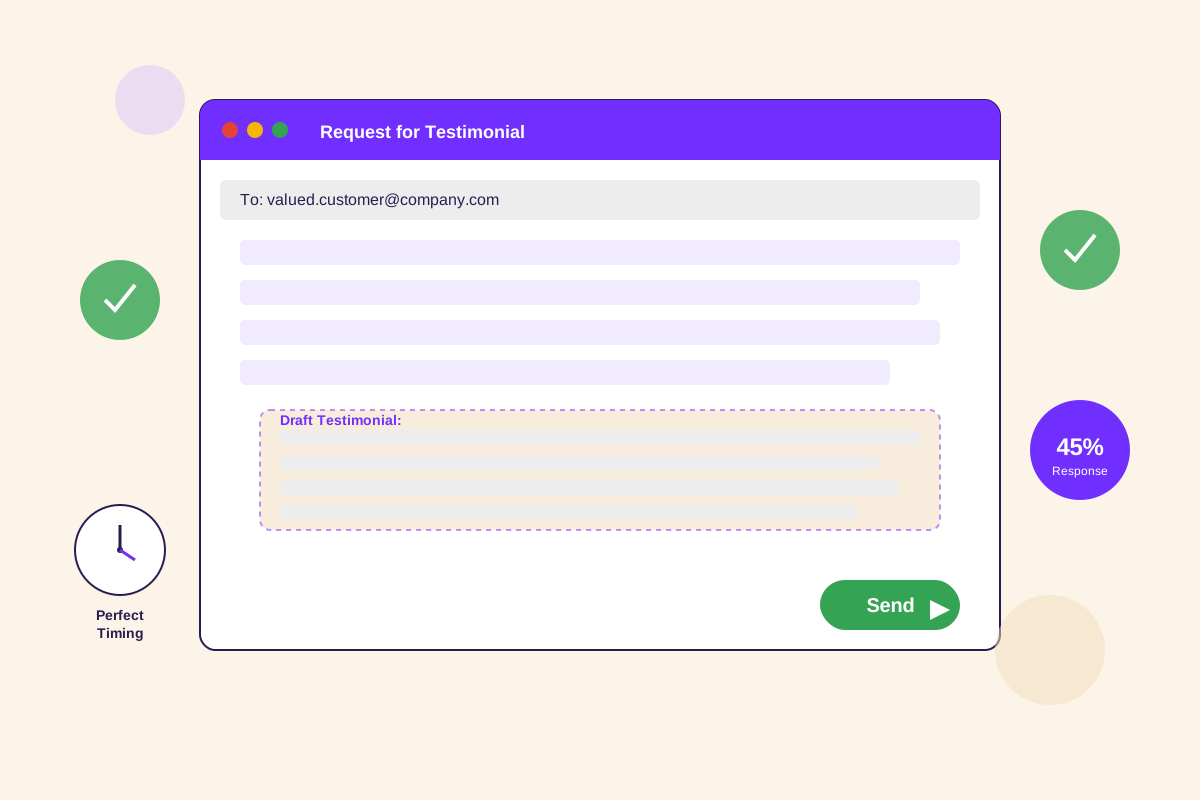
“Hi Sarah,
I just saw that you reduced your audit prep time from 6 weeks to 10 days. That’s an incredible result.
Would you be comfortable sharing your experience in a brief testimonial? Your story would really help other security leaders see what’s possible.
To make this super easy, I’ve drafted something based on our conversations—feel free to edit, use as-is, or completely rewrite:
‘HelloTrust cut our audit prep from 6 weeks to 10 days. The automated evidence collection alone saved our team 40+ hours. We went from dreading audits to having everything ready to go.’
If you’re comfortable with it, we’d also love to include your LinkedIn profile link and a photo. This helps readers see the credibility behind your story.
No pressure at all! Only if it feels right.
Thanks, James
P.S. If you’d rather do a quick 5-minute video testimonial instead, I’m happy to jump on a call!”
The difference? I’ve removed every point of friction.
I mentioned their specific achievement upfront (6 weeks to 10 days). This reminds them of the value and makes it personal.
I provided a draft. They don’t have to write anything from scratch—they can just review and approve in 60 seconds. If they want to edit or rewrite completely, that’s fine too. But the blank page problem is solved.
I explained why it matters. “Help other security leaders see what’s possible” frames this as paying it forward, not just helping me.
I gave them an easy out. “No pressure” and “only if it feels right” actually increases yes rates because people don’t feel trapped.
I offered an alternative format. Some people hate writing but love talking. A 5-minute video call is easy for them.
Response rate on this format? About 45%.
The follow-up that doesn’t feel pushy
Most testimonials require at least one follow-up. People are busy. Emails get buried. It doesn’t mean they’re not interested.
But there’s a right way and a wrong way to follow up.
Wrong way: “Hey, just checking in on that testimonial request. Did you see my last email?”
This feels like you’re putting pressure on them. It’s mildly guilt-trippy. And it doesn’t add any value.
Right way, sent 4-5 days after the initial ask:
Hi Sarah,
Just bumping this in case it got buried! Totally understand if now’s not a good time.
If you’re open to it but swamped, I can make this even easier:
- Send you a 60-second approval draft (literally just reply ‘looks good’)
- Jump on a 5-min call and I’ll handle the writing
- Circle back in a few weeks when things calm down
No pressure either way!
Thanks, James
The key is offering to reduce friction even further while giving them an easy out.
If they don’t respond to that, I send one final follow-up about a week later:
Hi Sarah,
Know you’re busy, so this is my last note on the testimonial idea!
If now’s not the right time, totally understood—just glad our product is working well for you.
If you do want to share your story but need it to be super quick, just reply ‘yes’ and I’ll send a 60-second approval draft.
Either way, thanks for being a great customer!
James
This final message is important because it closes the loop without burning the bridge. Some people will actually respond to this one, relieved that they can still participate without it being weird that they didn’t respond earlier.
The three emails I use most
Rather than reinventing the wheel every time, I have three templates that cover 90% of situations.
After a win:
Hi [Name],
I just saw that [specific achievement] - that’s incredible! [Specific metric] is a huge milestone.
Would you be comfortable sharing your experience in a brief testimonial? Your story would be valuable for other [target customers] trying to achieve similar results.
I’ve drafted this based on your results—does this look good, or would you like to make changes?
“[Draft testimonial]”
If this works, we’d love to include your LinkedIn profile link and photo to help readers connect with your story.
No pressure—only if it feels right!
Thanks, [Your name]
After positive feedback:
Hi [Name],
Your message about [specific feedback] made my day! It’s exactly the impact we’re trying to create.
This might be perfect timing—would you be open to us using this as a testimonial? I’ve formatted it below—feel free to edit:
“[Their feedback, lightly edited]”
Totally optional! Let me know if you want to make changes or if this doesn’t feel right.
Thanks, [Your name]
The super easy version for busy people:
Hi [Name],
Quick favor: you’ve had great results with [product] ([specific achievement]). Would you be open to a testimonial?
I’ve drafted this—just need 60 seconds to review:
“[Draft testimonial]”
Reply with:
- “Approved!” (I’ll publish as-is)
- Edits (I’ll update and send back)
- “Not right now” (totally fine!)
Thanks! [Your name]
The third one works surprisingly well for executives and founders who get hundreds of emails a day. The lighter the lift, the higher the response rate.
What to do when they say yes
Most people screw this up at the finish line.
Customer says yes, provides a great testimonial. Then… nothing happens. The testimonial sits in an email for weeks before someone finally gets around to adding it to the website.
Don’t do that.
When someone agrees to provide a testimonial, treat it like gold. Respond immediately with thanks and next steps.
First, confirm what you need:
Amazing, thank you! To finalize, could you send over:
- Your full title
- Link to your LinkedIn profile
- A professional headshot
- Permission to include your company logo (optional but helpful!)
This helps readers trust and relate to your story. I’ll send the final version for your approval before publishing.
Then, actually move fast. Get the testimonial designed and published within a week. Send them a final approval email with how it will look, wait for their okay, then publish it.
After it’s live, send them a thank you message with a link to where it appears. If you post it on LinkedIn, tag them. Make them feel appreciated for taking the time.
The whole process from “yes” to published should take less than a week. Any longer and you risk the testimonial going stale or the person changing their mind.
The objection I hear most
“I’m not a good writer.”
When customers say this, they’re worried about producing something that sounds professional and polished. They’re imagining having to craft the perfect testimonial from scratch.
My response:
“No worries at all! I’ve drafted something based on our conversations—you just need to review and approve. Should take 2 minutes. Here’s what I wrote: [draft]. Sound good?”
Ninety percent of the time, they approve the draft with minor or no changes. You’ve done the work. They’ve removed the work.
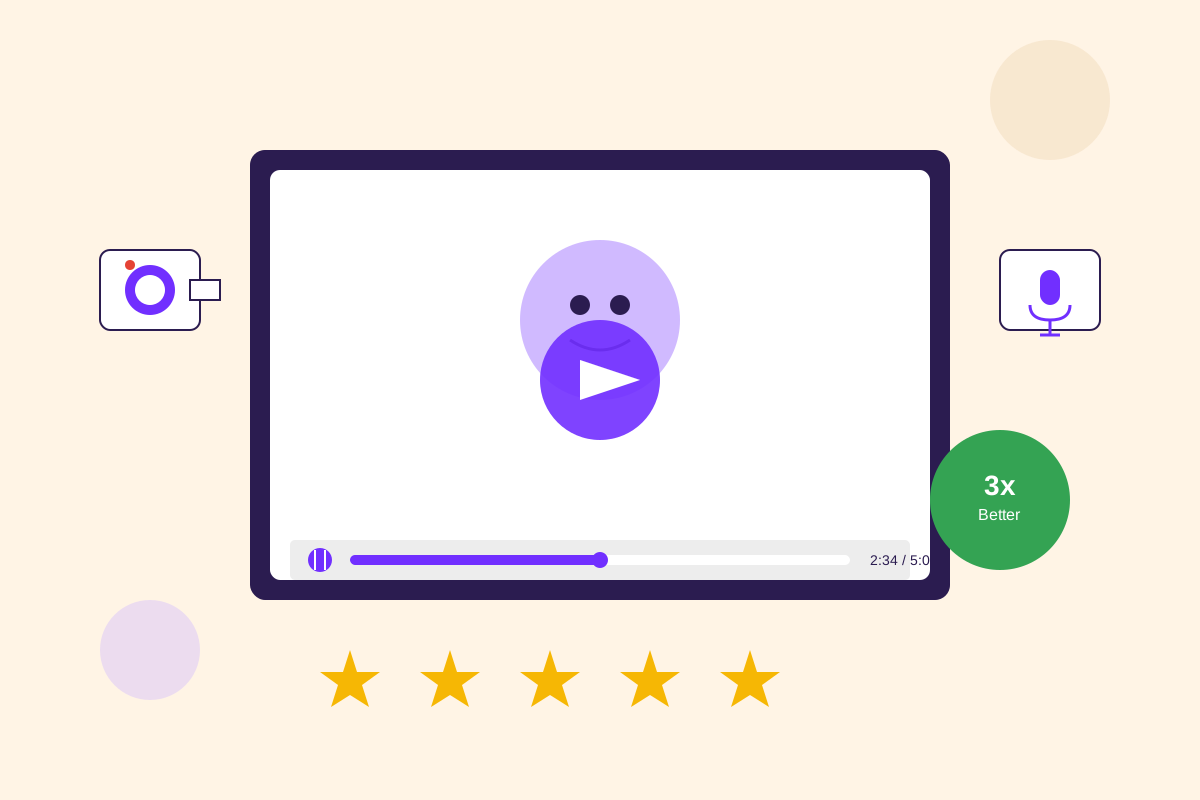
Occasionally someone will insist they really can’t do written testimonials. That’s when I offer the video alternative:
“No problem! How about a quick 5-minute video call instead? I’ll ask you a few questions, record it, and handle the editing. Much easier than writing.”
Most people who resist written testimonials are fine with video because it’s just talking naturally. You get a better testimonial anyway—video converts 3x better than text.
Start with three
If you’re reading this and thinking “I need to ask for testimonials but I’ve been putting it off,” here’s your action plan:
Identify three customers who’ve achieved great results in the past month. Pull up their metrics, achievements, or feedback. Write out specifically what they accomplished.
Use the “after a win” template above. Customize it with their specific achievement and draft a testimonial in their voice based on what you know about their experience.
Send all three emails this week.
Even if only one responds (though you’ll likely get 2-3), you’ve started the momentum. Next month, ask three more. Within a quarter, you’ll have a solid library of testimonials.
The hardest part is sending the first one. After that, it gets easier every time.
Want to automate the whole process? See how HelloTrust automatically triggers testimonial requests after customer milestones, provides one-click recording for customers, and handles follow-ups—so you can focus on building product instead of managing testimonial collection.